
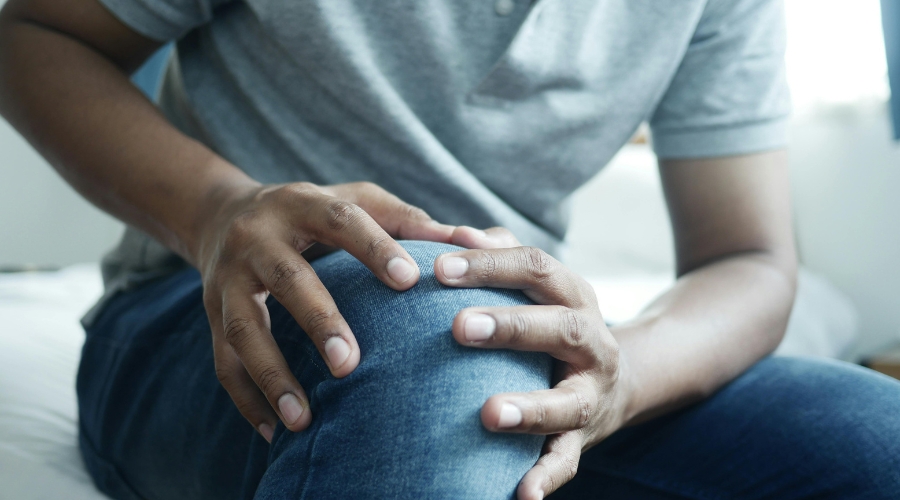
Knee pain is one of those knocks on the door many of us experience as we get older. But simply putting it down to “age” isn’t the full story, and it certainly doesn’t mean you have to accept it or reduce your activity.
Degenerative knee conditions can range from a mild ache and stiffness to persistent pain, swelling, and difficulty with walking, stairs, or getting up from a chair. Symptoms often worsen after prolonged sitting—what I call “start-up” stiffness—may ease briefly with gentle movement, but can flare again after long walks, hills, or gardening. Many of my clients are surprised to discover that these symptoms are highly manageable with the right approach.
What You’re Likely to See in Clinic
People typically report pain either on the inside or outside of the knee, or behind the kneecap. They often feel less confident on uneven ground and notice their leg muscles—especially the quadriceps at the front of the thigh—becoming weaker, making steps or hills feel more strenuous. There may be visible swelling, altered walking patterns, and, importantly, a fear of making things worse, which can lead to avoiding activity and subsequent deconditioning.
A GP may describe this as “wear and tear.” While the term is accurate, it’s not a sentence. There are effective, evidence-based strategies to reduce pain and keep you active.
Physiotherapy: What Really Helps
1. Targeted, Bespoke Exercise
Strengthening—particularly the quadriceps and hip muscles—alongside aerobic conditioning such as walking, cycling, or swimming, and neuromuscular work forms the backbone of treatment. Research shows exercise reduces pain and improves function across the spectrum of knee osteoarthritis. Tailoring the dose, progression, and type of exercise to your goals and tolerance is essential.
2. Manual Therapy (Used Alongside Exercise)
Hands-on techniques such as joint mobilisations and soft-tissue work can provide short- to medium-term pain relief, improve movement, and make exercise easier to perform. Evidence supports manual therapy as an adjunct—best delivered by an experienced physiotherapist alongside an active plan.
3. Pacing and Activity Modification
Learning to balance activity and rest prevents the “boom-and-bust” cycle, where a big activity can trigger prolonged flare-ups of pain. Small adjustments—like breaking jobs into shorter phases, using a walking pole or supportive shoes, and warming up gently before a walk or gardening session—can help you keep moving without provoking pain. Self-management and education are also core recommendations.
4. Weight Management and General Activity
Even modest weight loss reduces knee load and symptoms, while maintaining overall fitness improves long-term outcomes. National and European guidance emphasises physical activity, weight management, and simple aids like walking poles and supportive footwear as essential non-surgical care.
Practical Takeaways
If a GP has brushed off your knee as “age-related,” consider asking about a physiotherapy referral. It’s not just about painkillers—exercise, pacing, manual techniques, and small lifestyle changes often produce measurable improvements and help you stay active. Early, individualised physiotherapy gives you the best chance of remaining mobile and doing the things you enjoy.
For a free report with more information on knee pain, head to: Manage Knee Pain for Runners
Ed Voss Physiotherapy
Supporting healthy, active living for runners and active adults over 45
📞 Tel: 07542 940478
🌐 www.edvossphysio.co.uk
📸 Instagram | Facebook | LinkedIn